
Picking a first 3D sticker scene book
What actually comes in the box, the three questions that narrow 72 albums down to one, and what a first evening with a scene book looks like.
A 3D sticker scene book looks simple from the outside: a slim album, a stack of printed rooms, a stack of sticker sheets. The trick is that the shelf holds dozens of them and the covers all promise roughly the same cozy little world. Three questions sort them out.
First, what is actually in the box
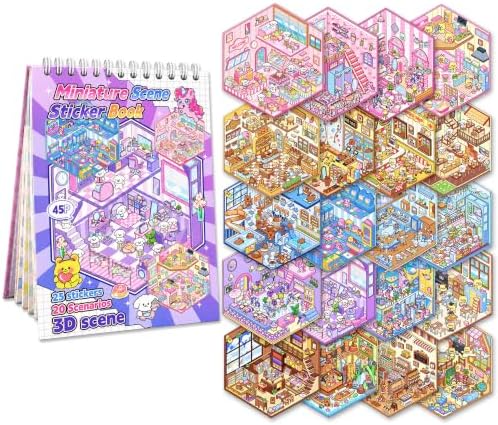
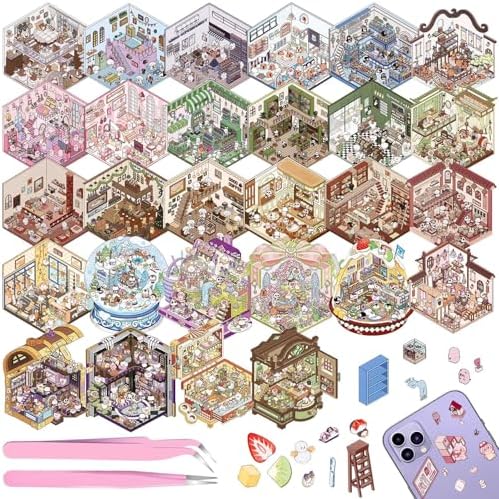
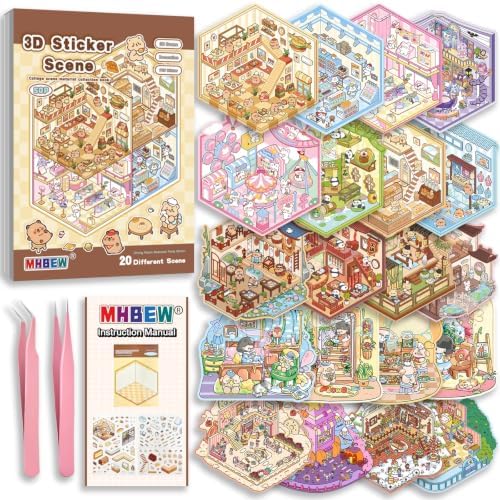
Every scene book pairs printed background pages with matching sticker sheets. One background plus its sheet is called a set, and a finished set is a scene: a room, a shop, a garden corner, built up in layers of furniture, plants, snacks and small figures. Most standard albums also pack a pair of plastic tweezers, and they are not a gimmick. Two thirds of the listings on this shelf mention tweezers in the box, because the smallest pieces in a standard book are the size of a grain of rice.
Question one: how many scenes
The standard album carries 20 sets, and that number is close to a law. Of the 72 albums in the twenty scene section, 59 hold exactly 20, with a few outliers running to 24, 32 or even 50. Twenty scenes is weeks of evenings for most people. Anyone unsure whether the hobby will stick can start smaller: the small kit shelf runs from 2 to 16 scenes, and a 4 set kit is one easy weekend, not a commitment.
Question two: how big are the pieces
Standard pages are compact and the cuts are tiny, which is exactly what the tweezers are for. Big size editions print the same idea on wider paper, roughly ten inches across, with cuts broad enough for fingers. They carry fewer scenes, usually 7 to 12, and cost a little more, but nobody squints at them. Anyone who already knows they dislike fiddly work should read the format comparison before buying a standard book out of habit.
Question three: which rooms
Themes cluster hard. Cozy interiors lead the shelf with 68 titles: bedrooms, reading corners, kitchens, bakeries with lit windows. The pastel kawaii style with round-faced animals comes next, then storefronts and market stalls, then a small dark shelf of gothic manors and haunted rooms, and a short row of woodland and garden scenes. The honest advice is to pick the art someone wants to stare at for an hour, because that is exactly what building a scene involves.
What a first evening looks like
One background page, one sheet, big pieces first. Sofas and shelves go down before books and teacups, the same way a real room gets furnished. A single scene takes somewhere between twenty minutes and an hour depending on how many pieces the page carries, and it ends with a finished picture rather than a half of one, which is a large part of why the hobby is pleasant. Nothing needs charging, nothing needs cleanup beyond a strip of empty backing paper.
The typical standard album sits under ten dollars, so a wrong first pick is a small mistake. Still, three questions answered in order beat guessing. The first book picker asks the same three and puts matching albums on one page.
More notes
Twenty sets or big size: two shapes of the same book
The standard album and the big size edition build the same scenes at different scales. Page width, piece size, scene count and price, compared from the shelf.
GiftingWho gets which book: a gift map for the sticker shelf
Scene books make good presents because they need no batteries and no instructions. Matching the format to a teenager, a coworker, a small kid or a traveler.